Published: 26 June 2025
Position Paper
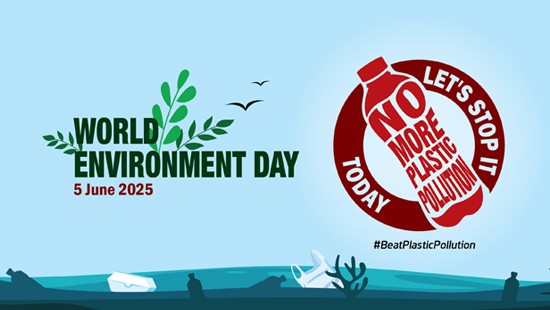
Globally, World Environment Day has been celebrated on 5th June every year since 1972 to promote sustainable practices, advocate for policy changes, and inspire individual and collective action. Every year, this day is celebrated worldwide with a specific theme, and the main theme of this year's World Environment Day is ‘Ending Plastic Pollution.’ The designated 2025 World Environment Day host venue is the Jeju Special Self-Governing Province in the Republic of Korea, which declared a vision to become free of plastic pollution by 2040. It is worth noting that 430 million tons of plastic are produced worldwide every year, two-thirds of which is single-use plastic that is discarded as waste. This waste is causing widespread environmental and public health damage through water, air, and soil pollution. To minimize the impacts of plastic pollution, a global plastic treaty is being developed by the United Nations Environment Programme (UNEP). As part of this process, representatives from 175 countries will convene in Geneva, Switzerland, for the Intergovernmental Negotiating Committee (INC) in August 2025. They are expected to agree on a legally binding treaty specifying global targets to reduce plastic production, phasing out toxic chemicals in plastics, and providing financial and technical support for developing countries. Therefore, this year’s World Environment Day is uniquely positioned for impact.
Governance deficits in plastic waste management globally: Plastics are derived from fossil fuels, and about 12% of global oil extraction and 8.5% of gas extraction takes place to produce plastic every year. The production and disposal of plastics are responsible for around 3.4% of annual greenhouse gas emissions2 , which exacerbate climate change. However, only 11 out of 194 countries that signed the Paris Agreement included greenhouse gas emissions from plastics within their Nationally Determined Contribution (NDC) plans. Bangladesh is not among these 11 countries. As a result, plastics are not discussed as an agenda item in global climate negotiations.
Click below for details
.png)