Published: 06 October 2026
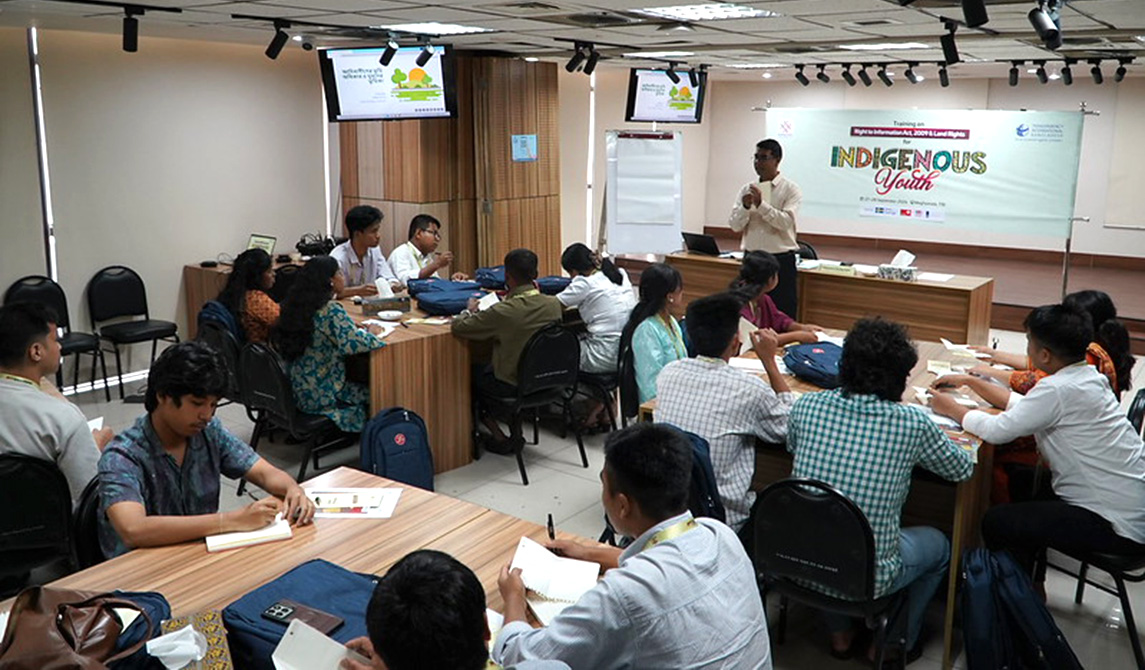
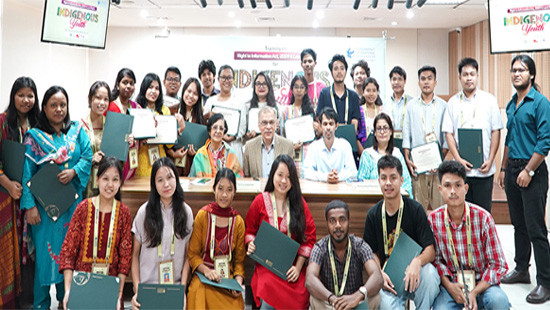
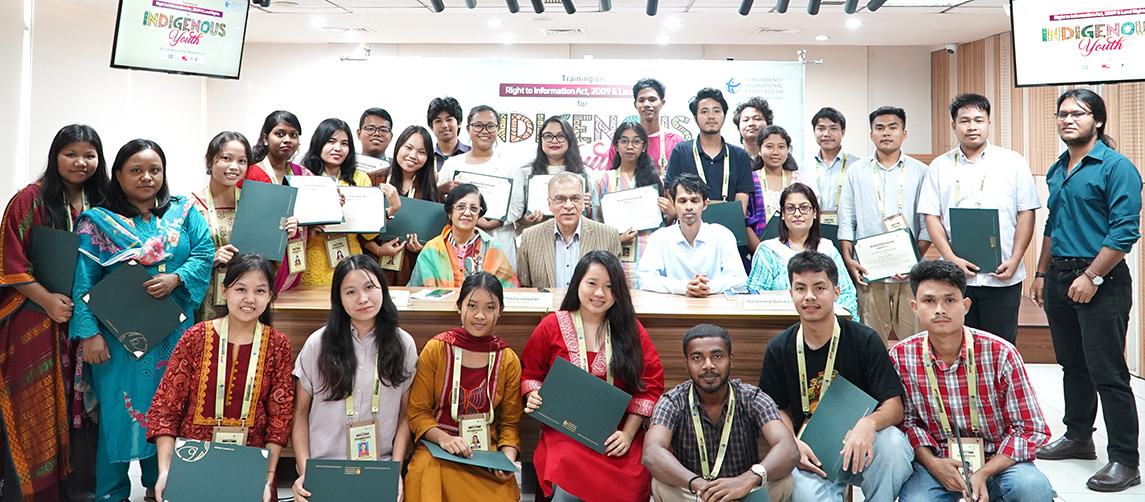
On the final day of a two-day training in Dhaka, a group of young people representing some of Bangladesh’s diverse Indigenous communities sat together in one room. Some wore their traditional attire. The room was filled with smiles, conversations, and a sense of accomplishment.
Then came a simple question. “How was the training?”
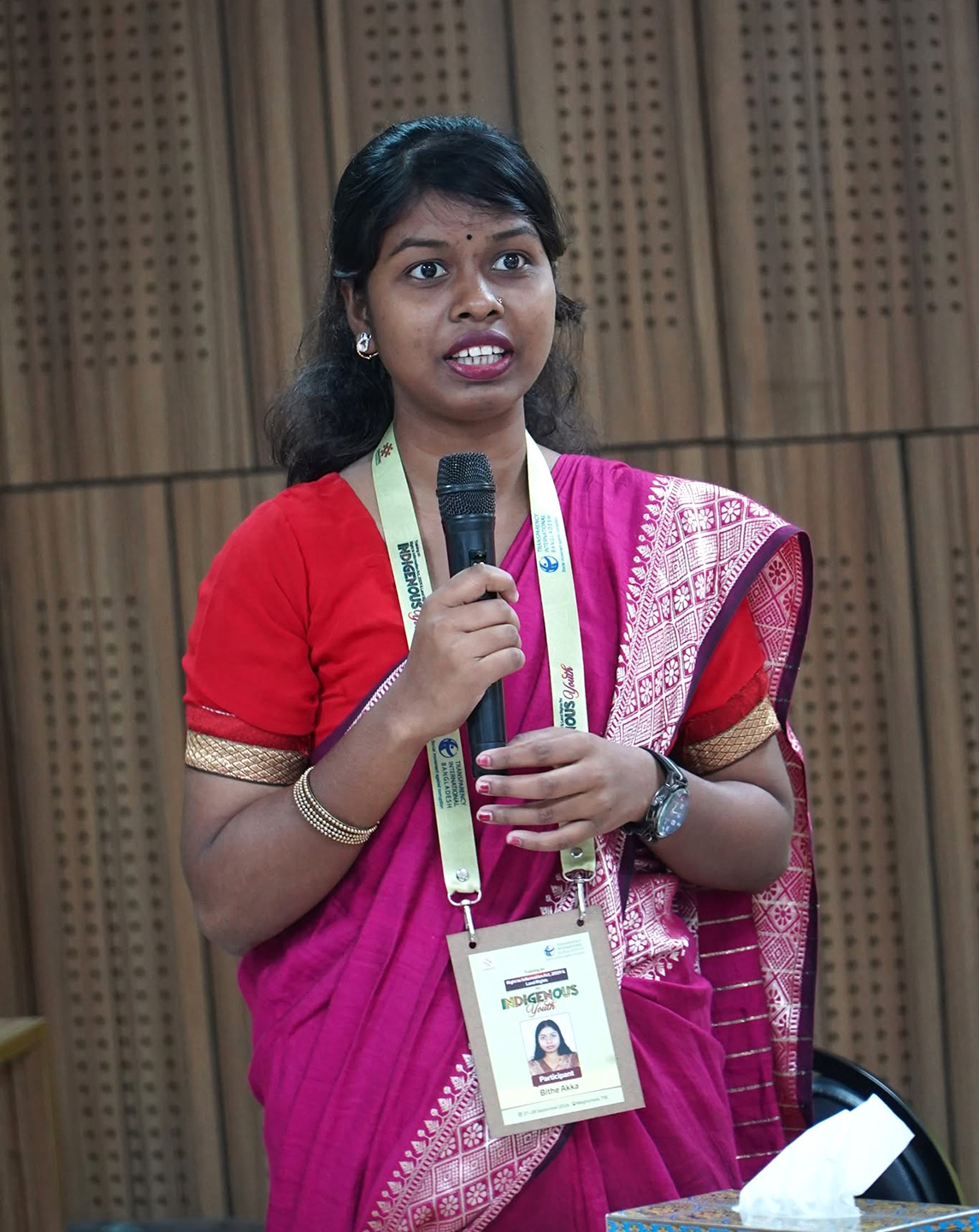
For a moment, everyone looked at one another, unsure who would speak first. Then a hand went up. It belonged to Bithe Akka, an Oraon youth from northern Bangladesh, who answered with candid confidence.
“The two-day training on Right to Information and Land Rights was incredible. I request the organisers to conduct more such trainings for Indigenous communities in the plains, as they are, in many cases, neglected.” Her words echoed a central message of the training. Knowledge of rights matters only when people can use it to address the challenges they face.
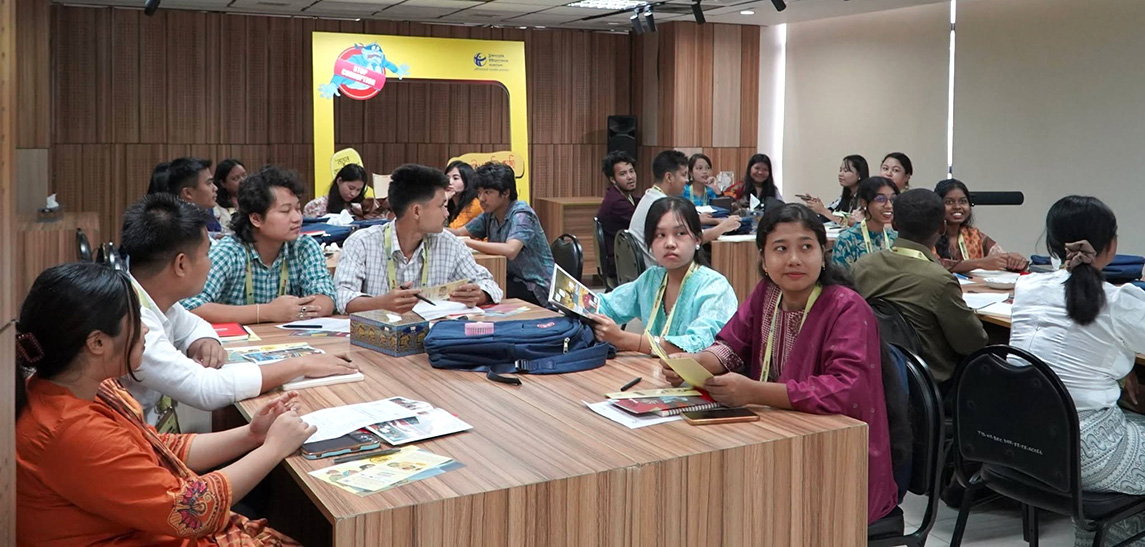
Twenty-five Indigenous youth from ten communities took part in the training. They came from the Khasi, Garo, Oraon, Chakma, Mro, Tripura, Khyang, Tanchangya, Marma and Khumi communities. Transparency International Bangladesh (TIB) organised the training with Kapaeeng Foundation on 27 and 28 September 2026 to mark the International Day for Universal Access to Information.
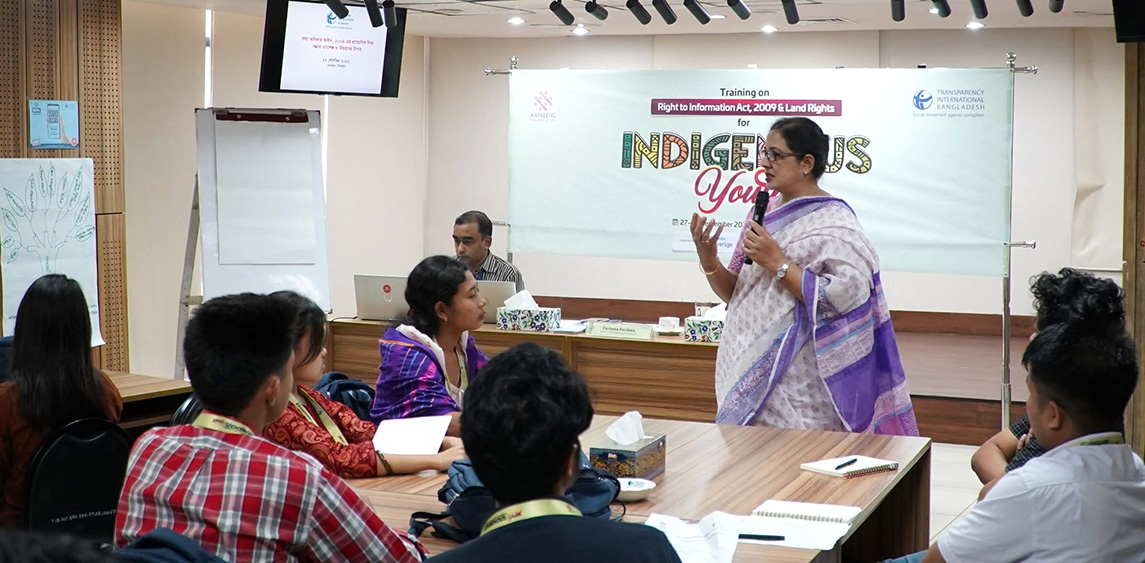
The objective of the training was clear. TIB wanted to equip Indigenous youth with practical knowledge of the Right to Information (RTI) Act, 2009, and a basic understanding of land rights. This would help them seek information, understand their rights, and respond to irregularities, anomalies, and corruption when they will be able to access government services.
Why the Right to Know Matters
Although the government does not officially recognise the term “Indigenous,” it recognises 50 ethnic communities in Bangladesh, which together make up around 1% of the country’s population. For many of these communities, land rights remain a major concern. Many have lost ancestral land because they lack proper documentation and know little about their land rights. Limited access to information makes these problems worse.
This is where the right to know matters most. Without the right information, Indigenous communities find it harder to protect their rights and access government services. TIB’s research report, Inclusion of Indigenous Peoples in “Social Safety Net Programmes: Governance Challenges and Ways Forward”, also found that marginalised communities are often denied access to information.
TIB designed the training to go beyond awareness raising. It aimed to give Indigenous youth practical knowledge they can use to respond to these challenges. Through sessions on land rights and the right to information, TIB sought to empower young people from both the plains and the Chittagong Hill Tracts to question irregularities, seek information, and take a more active part in tackling injustices linked to gaps in governance and accountability. The two days were meant to help them become informed actors who protect their rights and demand greater accountability.
Two Days, Two Rights
Both days were built around interaction. The first day focused on land rights, which remain closely tied to the lives and livelihoods of many Indigenous communities. Veteran trainer Md. Shofiqul Islam of the Association for Land Reform and Development (ALRD) led the participants through the basic concepts of land rights, relevant laws, customary practices, and the international recognition of Indigenous land rights. The sessions also explored the realities of land rights in the Chittagong Hill Tracts and the plains, along with the challenges Indigenous peoples face and possible ways forward.
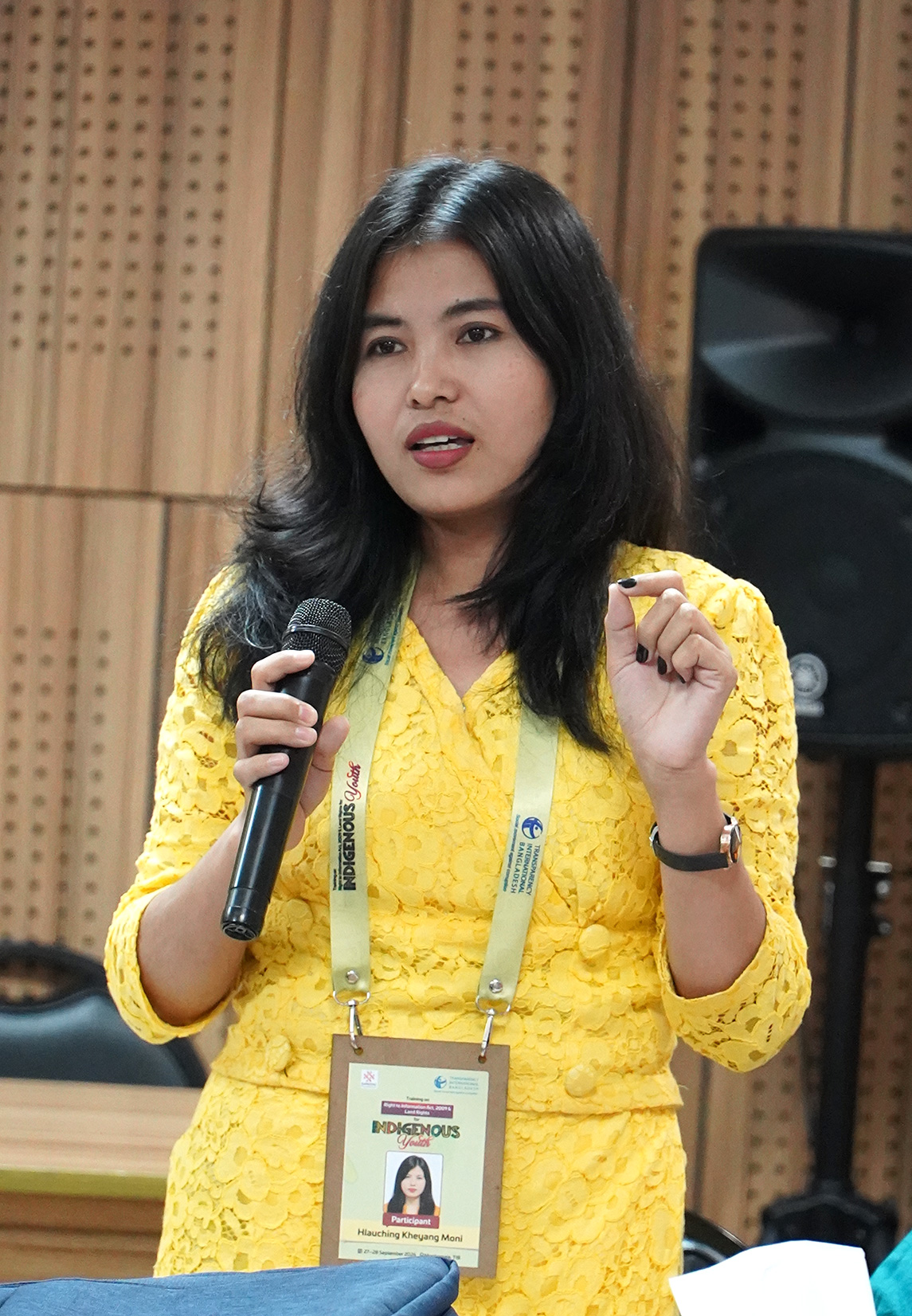
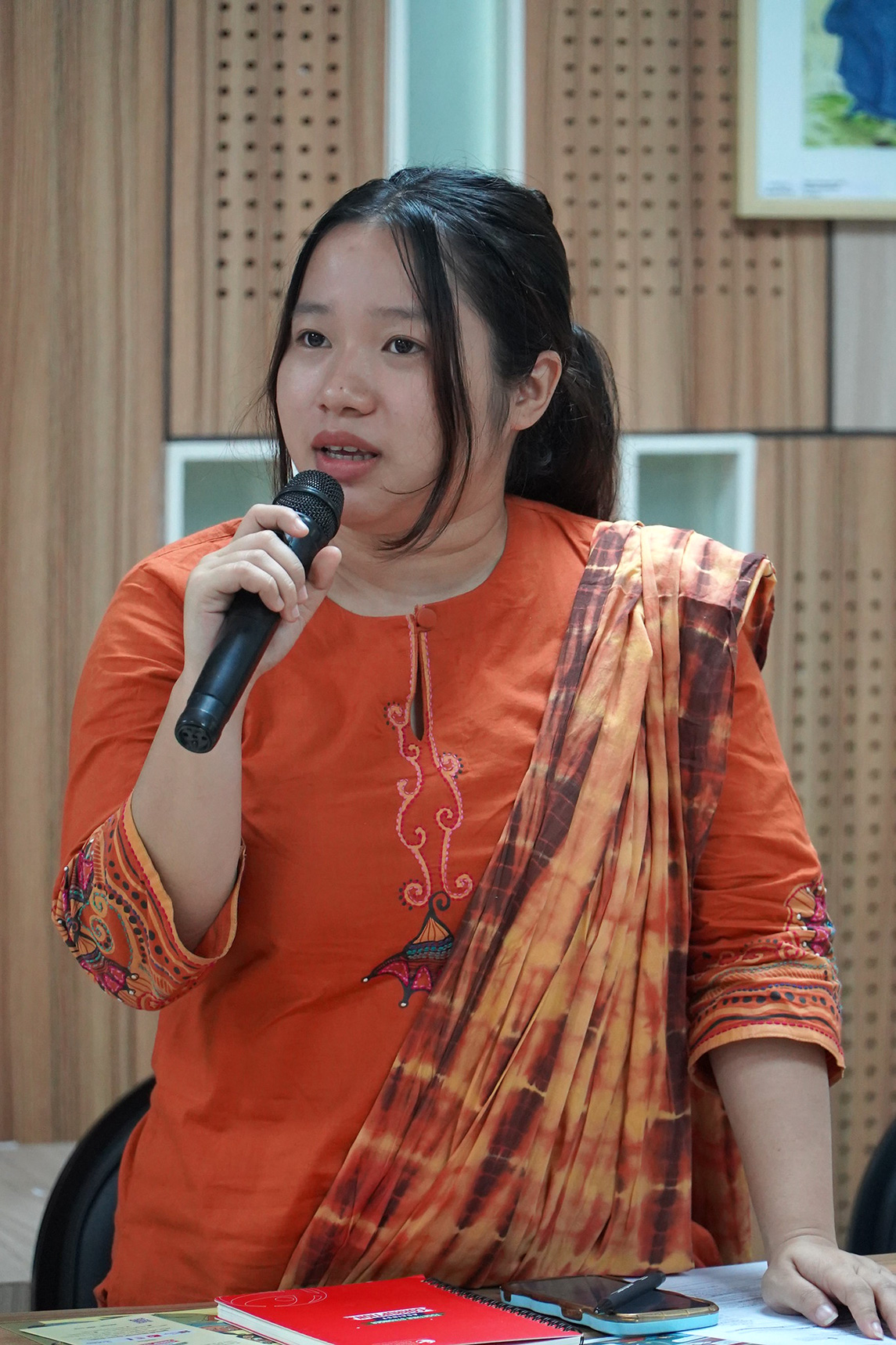
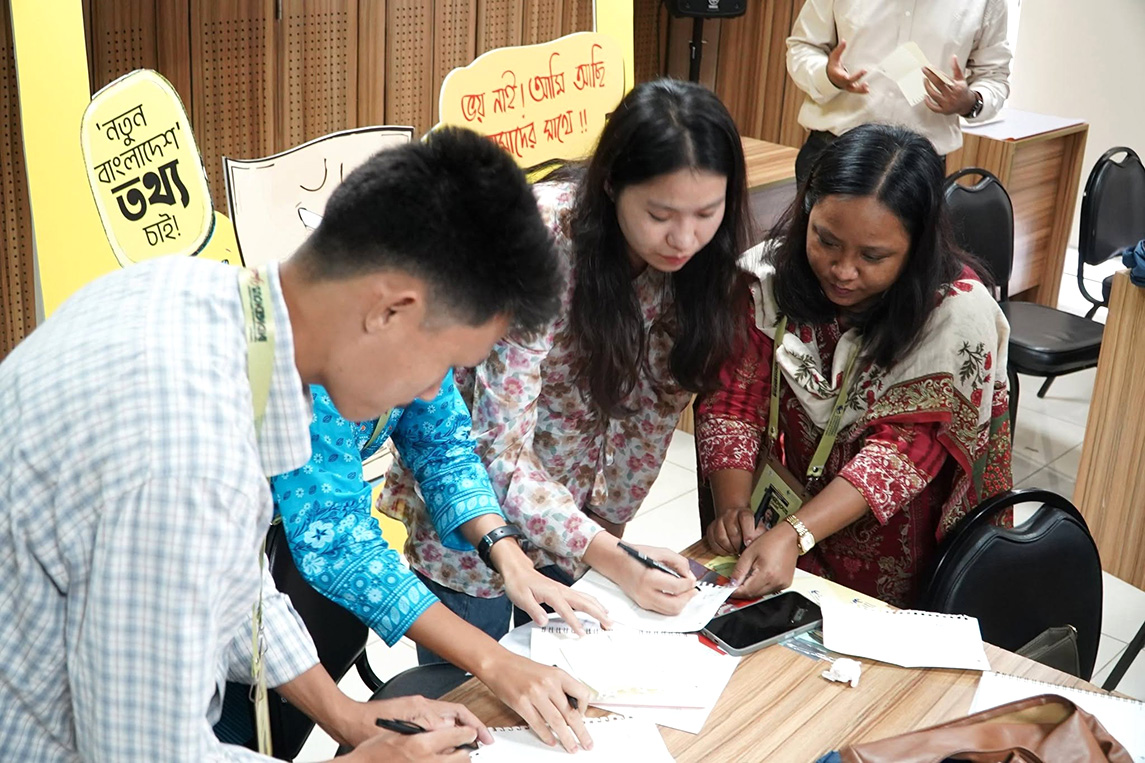
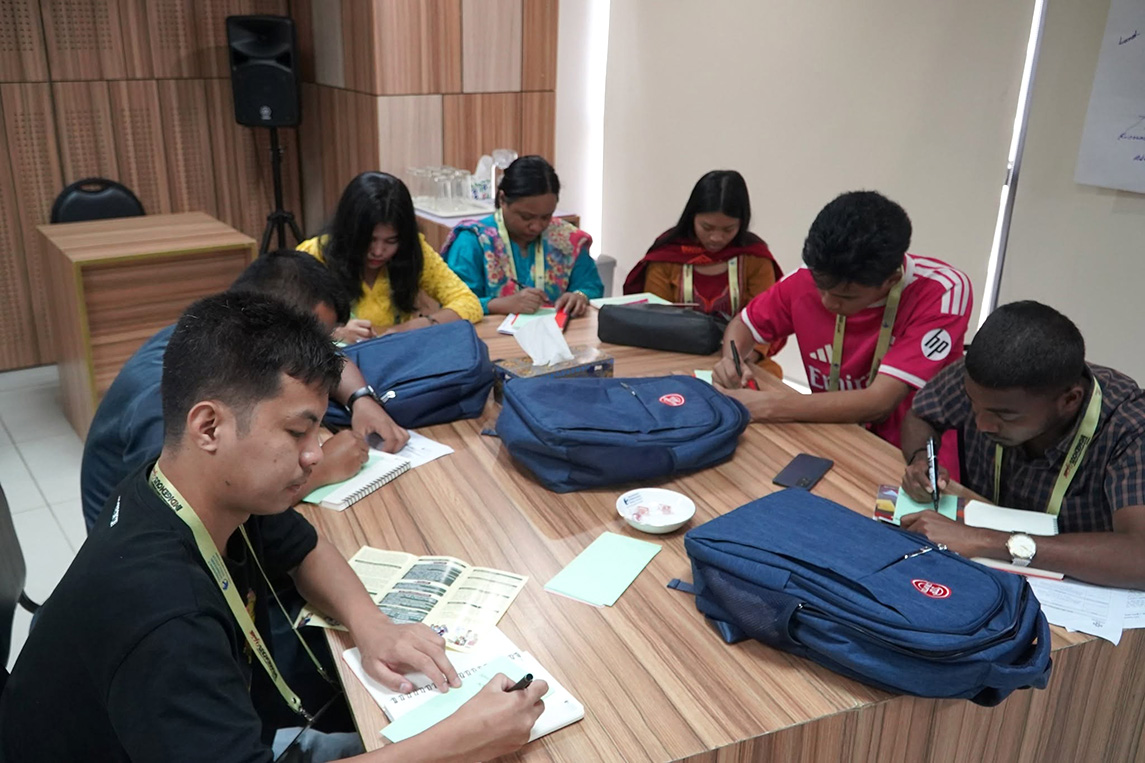
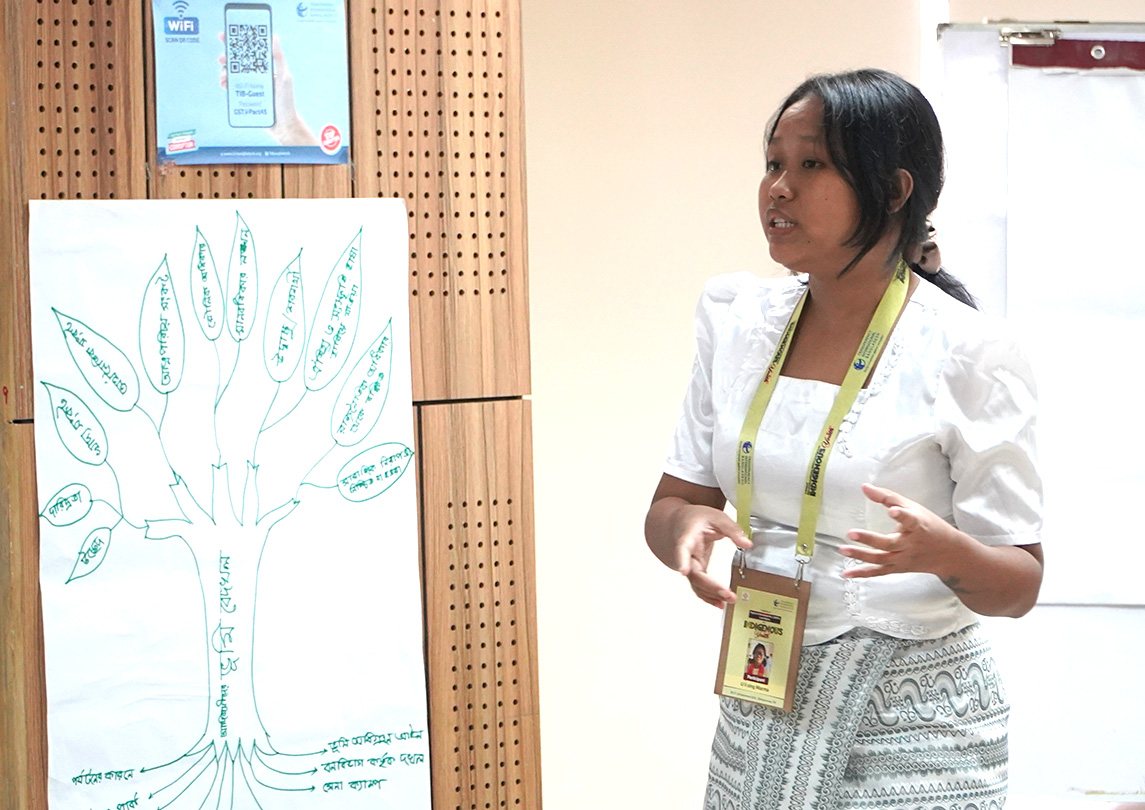
Rather than relying only on lectures, the trainer divided the participants into six groups. Each group worked through a task before sharing its findings with the trainer.
Pallab Chakma, founding Executive Director of Kapaeeng Foundation and now Secretary General of the Asia Indigenous Peoples Pact (AIPP), joined the opening session online. He urged the young participants to learn actively, take pride in the communities they come from and use their new knowledge to support those communities. He also thanked TIB for running the training with Kapaeeng Foundation since 2022, and stressed the value of continued learning opportunities for Indigenous youth.
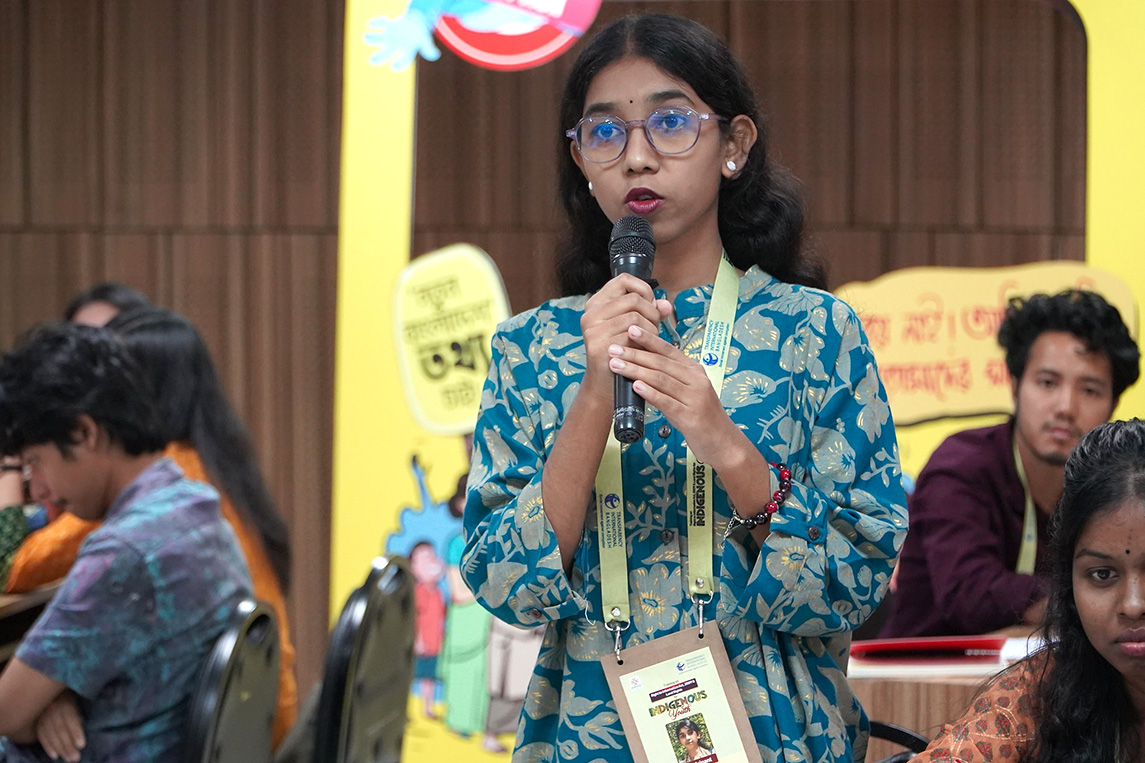
The second day turned to the RTI Act, 2009. Ferhana Ferdous, Director of Civic Engagement at TIB, showed participants how to seek information under the law and how to prepare an RTI application. Group discussions and practical examples turned a technical subject into something participants could relate to and use in their communities.
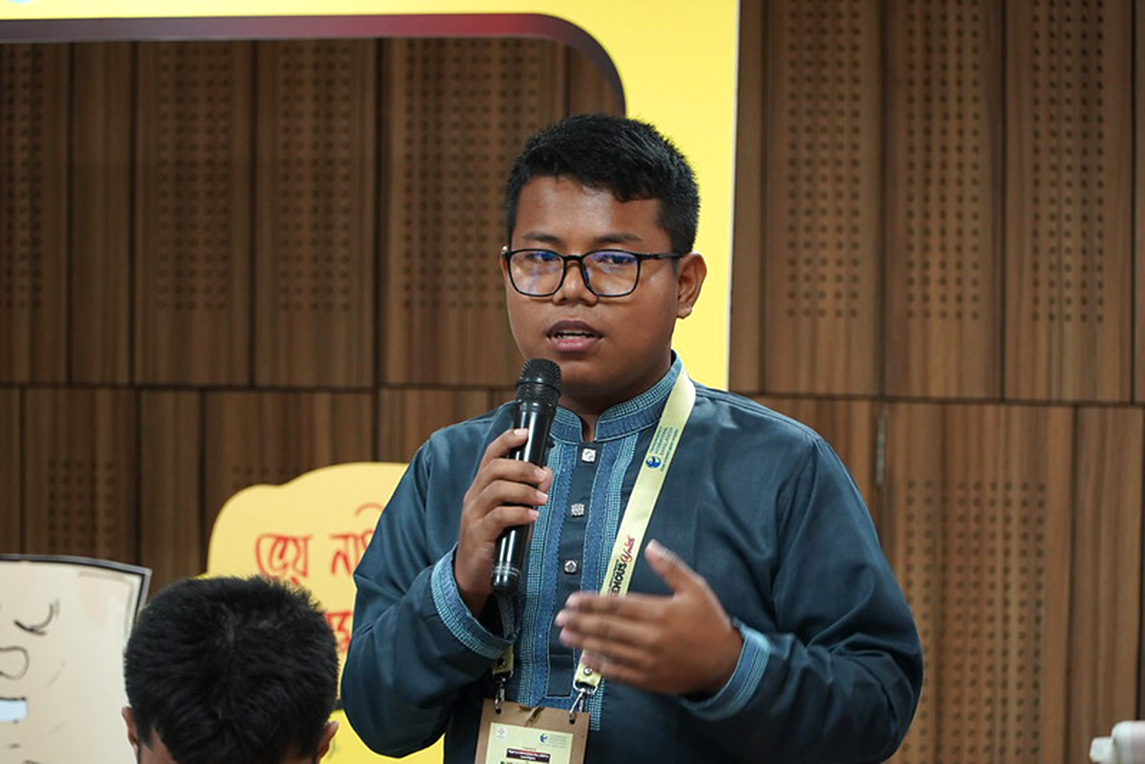
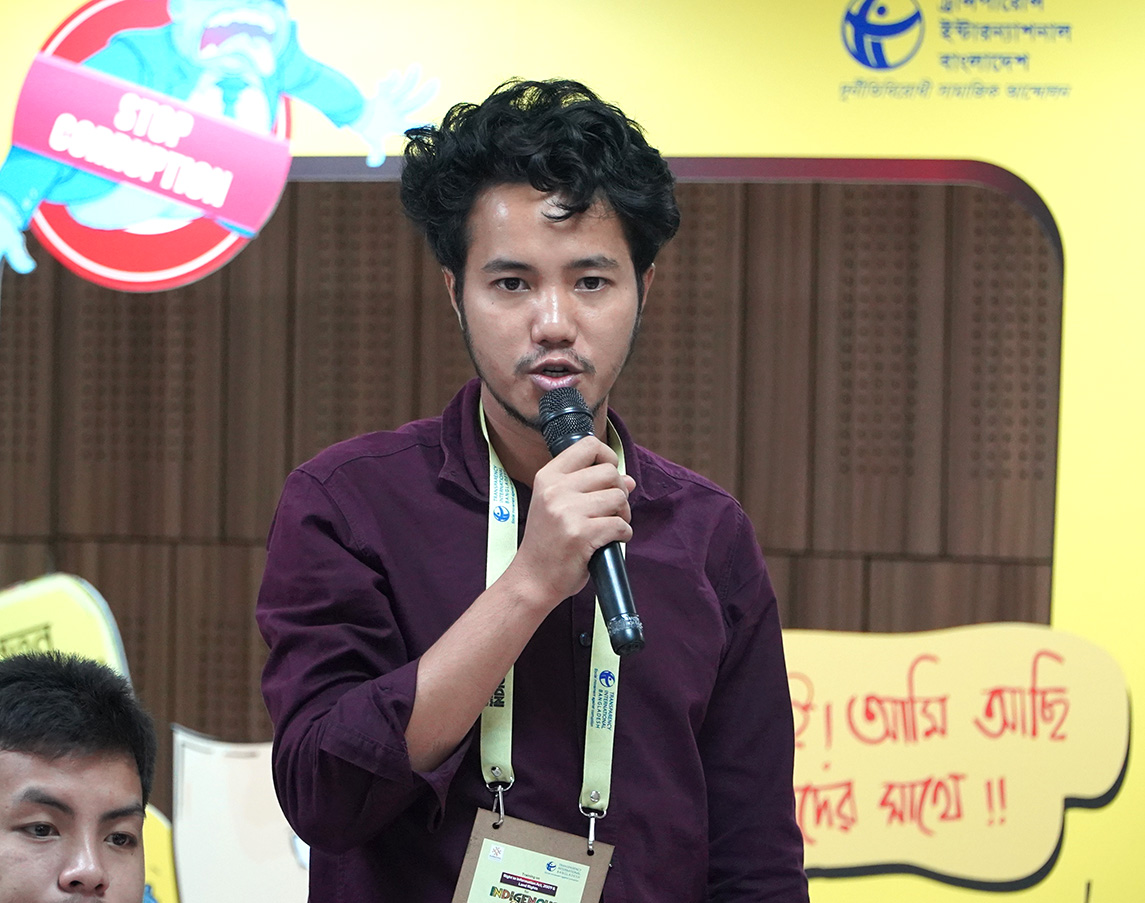
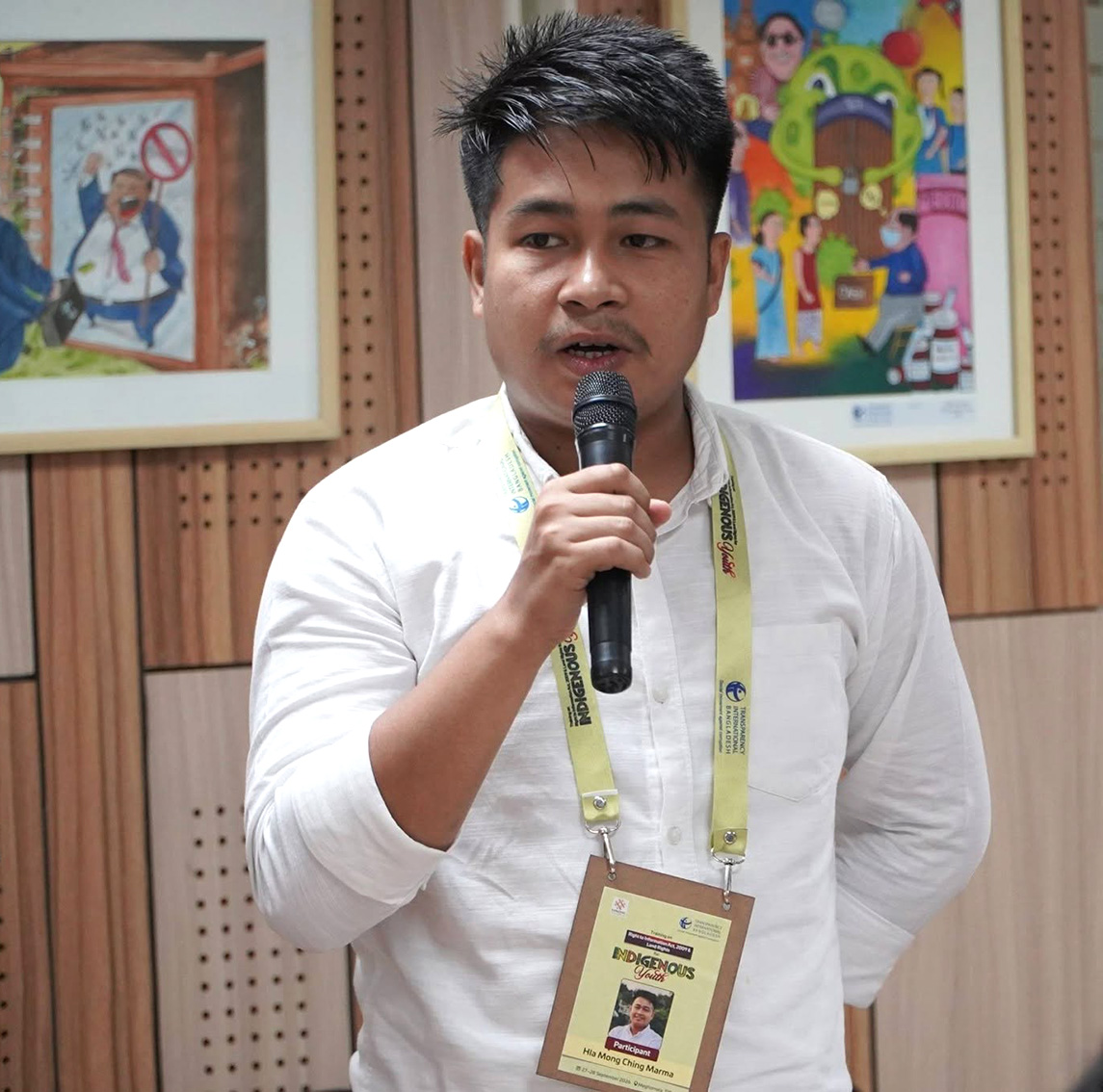
For some participants, the learning was entirely new. “I never knew this much about land rights and international perspectives. And the RTI Act topic was entirely new to me. I didn’t know how to ask for information, and now I know,” said Jajong Ritchil, a university student from the Garo community in Madhupur, Tangail.
Other participants shared similar experiences. Many said the training gave them a clearer understanding of how information and knowledge can help them protect and claim their rights.
Listening to Young Voices
The participants did not only take new knowledge home. They also offered thoughtful recommendations to make future trainings more relevant, practical, and inclusive. They suggested a three-day programme to allow more time for complex issues such as land rights, along with more practical exercises and field-based learning. They also called for more opportunities at the district level and equal representation of Indigenous youth from the plains and the Chittagong Hill Tracts in future programmes.
Mohammad Tauhidul Islam, Director of Outreach and Communication at TIB, moderated the closing session. Prof. Dr. Sumaiya Khair, Adviser to Executive Management at TIB, urged the participants to take what they had learned beyond the training room. She encouraged them to use the RTI mechanism when they deal with government offices, and assured them of TIB’s continued support, including technical help with preparing and submitting RTI applications.
Dr. Iftekharuzzaman, Executive Director of TIB, echoed her message and urged the young participants to turn their new knowledge into action. Responding to their recommendations, he said future programmes would seek more balanced participation from the plains and the Chittagong Hill Tracts, with greater attention to the land rights challenges of Indigenous communities in the plains. He also assured the participants of TIB’s technical and legal support when needed. He added that TIB would seek to deepen its engagement with Indigenous youth through programmes in areas such as Sherpur, Sreemangal and Madhupur.
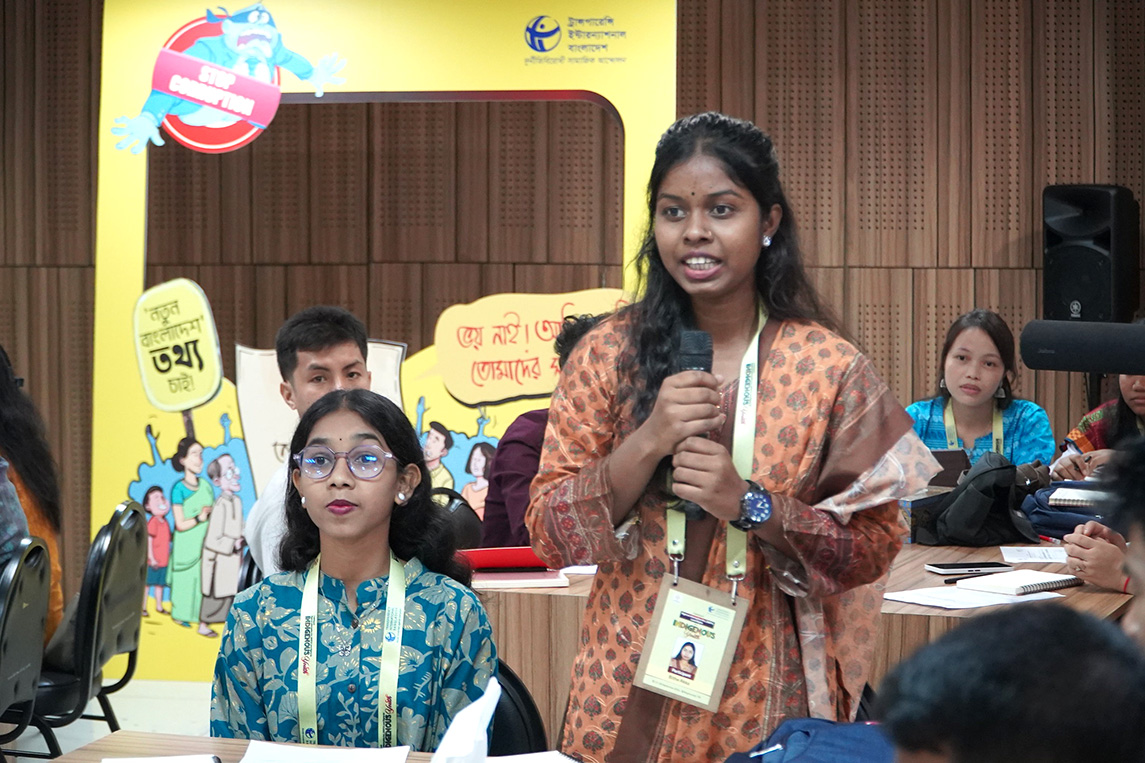
He stressed that the two-day training need not end their engagement with TIB. The participants will remain connected as alumni. Future trainings may run for three days, and follow-up work will continue beyond the classroom.
From Participants to Change-Makers
The training has ended, but the questions it raised point to a much longer journey. For Indigenous youth, the right to know is more than a legal principle. It can determine whether they can access a government service, understand a decision affecting their community, challenge an irregularity or seek information about land and other rights. The real test of the training lies in what participants do with their knowledge after they return home.
Back in the training room, Bithe Akka’s call for more trainings for Indigenous communities in the plains reflected that need most clearly. The training gave the participants information. Turning it into action is now in their hands.