
Published: 29 September 2026

The right to information is not limited to the right to request it. Ensuring that information of public interest reaches citizens easily, timely, and proactively is equally important. Proactive disclosure facilitates the flow of information, strengthens citizen participation, and helps make institutions more transparent and accountable.
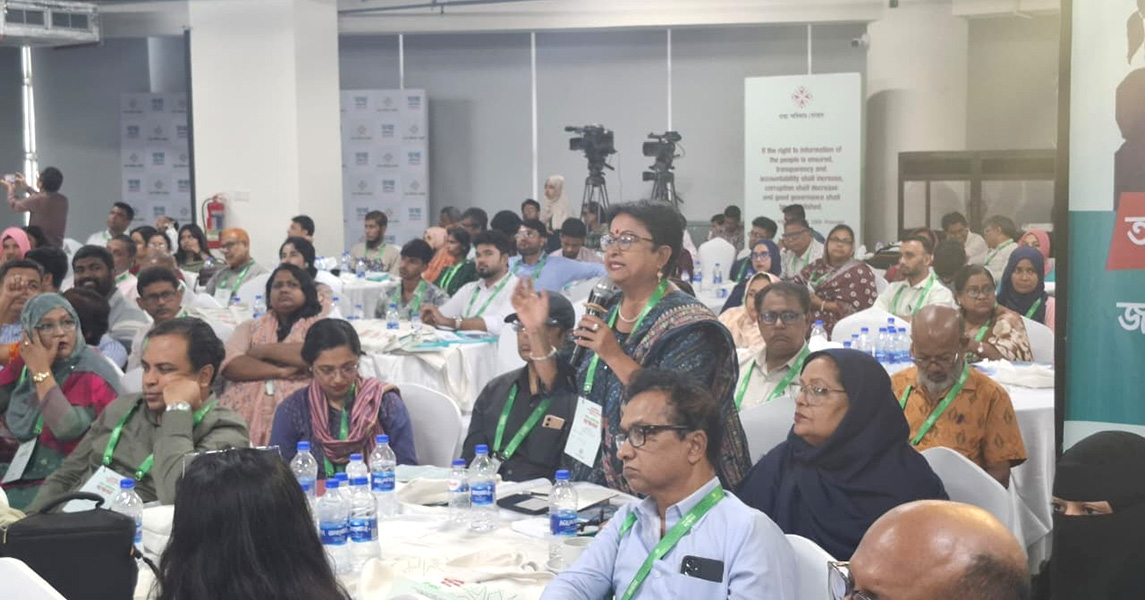
This principle was at the heart of the Right to Information Conference, organised by the RTI Forum in Dhaka to mark the “International Right to Know Day.” The conference was held in the Daily Star Center today and brought together government and civil society representatives, information-rights advocates, and other stakeholders to explore how the right to information can work more effectively for citizens.

At the opening session, as a special guest, Transparency International Bangladesh (TIB) Executive Director Dr. Iftekharuzzaman stressed that an effective right to information regime depends on both credible institutions and the capacity to exercise that right in practice. He called for impartial appointments to the Information Commission, a review of provisions inconsistent with the Right to Information Act 2009, and the removal of bureaucratic barriers that hinder access to information. At the same time, he emphasised the shared responsibility of citizens and institutions that citizens need to know how to seek and use information to demand accountability, while public authorities must recognise disclosure as an institutional obligation and proactively make information of public interest accessible. Strengthening both sides of this process, he noted, is essential for the Right to Information Act to deliver its intended benefits to citizens.

Following the opening session, the “Bangladesh Right to Information Survey 2026: Findings and Way Forward” report was launched. Shaheen Anam, Founding Convener of the Right to Information Forum and Executive Director of Manusher Jonno Foundation (MJF), delivered the welcome remarks at the conference.
The full-day conference featured four plenary sessions, taking the discussion from the broader right to information to its practical application. One of these, “How Proactive Disclosure Helps E-Governance,” explored how information disclosed proactively can strengthen transparency and accountability, particularly as public services and governance increasingly move to digital platforms.


Taking forward his earlier emphasis on institutional responsibility for disclosure, Dr. Iftekharuzzaman focused on its importance for preventing corruption and strengthening accountability. He noted that greater secrecy creates greater scope for corruption, while proactive disclosure can help public institutions move from a culture of secrecy to one of openness. Since public institutions manage resources that ultimately belong to the people, citizens have a right to know how those resources are being used.
He illustrated the point with TIB’s experience of using publicly disclosed information for scrutiny. Information provided by parliamentary candidates has enabled TIB to analyse changes in their income and wealth across elections and identify patterns that warrant accountability. Similarly, analysis of more than 600,000 public procurement contracts revealed a significant concentration in government contracting, with around 5% of contractors securing over 60% of the contracts.
For Dr. Iftekharuzzaman, however, disclosure is only one part of the accountability chain. Publicly available data can reveal patterns and potential irregularities, but the relevant oversight and enforcement institutions must use that evidence and act on it for disclosure to contribute to corruption control. He cited TIB’s engagement with the National Board of Revenue using public procurement data as an example of how disclosed information can support institutional scrutiny and follow-up.
This accountability perspective connected with the digital governance dimension highlighted by Dr. Sadia Sharmin, Director General (Additional Secretary), Department of ICT. She underscored the role of government digital systems in making public information more readily available, regularly updated, and easier for citizens to access. Integrating proactive disclosure into digital governance can reduce the need for citizens to repeatedly request information that should already be public. At the same time, she emphasised that information must be presented in ways that are accessible, usable, and citizen-friendly if digitalisation is to genuinely contribute to greater transparency.

But information being digitally available does not necessarily mean that it reaches everyone. Taking the discussion from disclosure to the citizen level, AHM Bazlur Rahman, Chief Executive Officer of BNNRC, highlighted the importance of ensuring that public information reaches communities, including people with limited digital access, through channels and formats they can actually use. This last-mile connection is essential if proactive disclosure is to strengthen participation and inclusion rather than simply increase the volume of information online.
Bringing these perspectives together, moderator Dr. Ananya Raihan, Executive Chairperson of iSocial, connected proactive disclosure with the wider goals of citizen engagement and accountable governance. Digital platforms and open data become meaningful when citizens can understand and use the information, engage with public institutions, and scrutinise public decisions. Katharina König, Deputy Team Leader, Nagarikata: Civic Engagement Fund, also joined the discussion.

The session therefore traced a clear pathway that digital systems can make information available, proactive disclosure can turn that information into an instrument for scrutiny, and accessible communication can ensure that it reaches and empowers citizens. For the right to information to deliver on its promise, the principle remains maximum disclosure and minimum exemption, with public information reaching people in ways that enable participation, transparency, and accountability.