Published: 14 June 2026
As many children prepare for school in the morning, others begin their day at dumpsites, secondary transfer stations, or along city streets, searching for scraps of plastic, glass, and metal. Instead of books, they carry sacks of waste. Instead of entering classrooms, they step into hazardous working conditions.
But should this reality be accepted as inevitable? Or can effective policies, stronger accountability, and collective action change it?
Child labour in Bangladesh’s waste sector reveals a much deeper governance challenge. According to the Bangladesh Bureau of Statistics’ National Child Labour Survey 2022, around 1.78 million children are engaged in labour across the country, more than one million of them in hazardous work. Waste collection and recycling are among the sectors where children routinely face serious risks.
Although laws and policies prohibit child labour, the informal nature of waste management, weak oversight, and gaps in enforcement allow the practice to persist. Ending it therefore requires more than legislation. It demands accountability within informal waste systems, effective action by local authorities, responsible conduct from service providers, and greater public awareness.
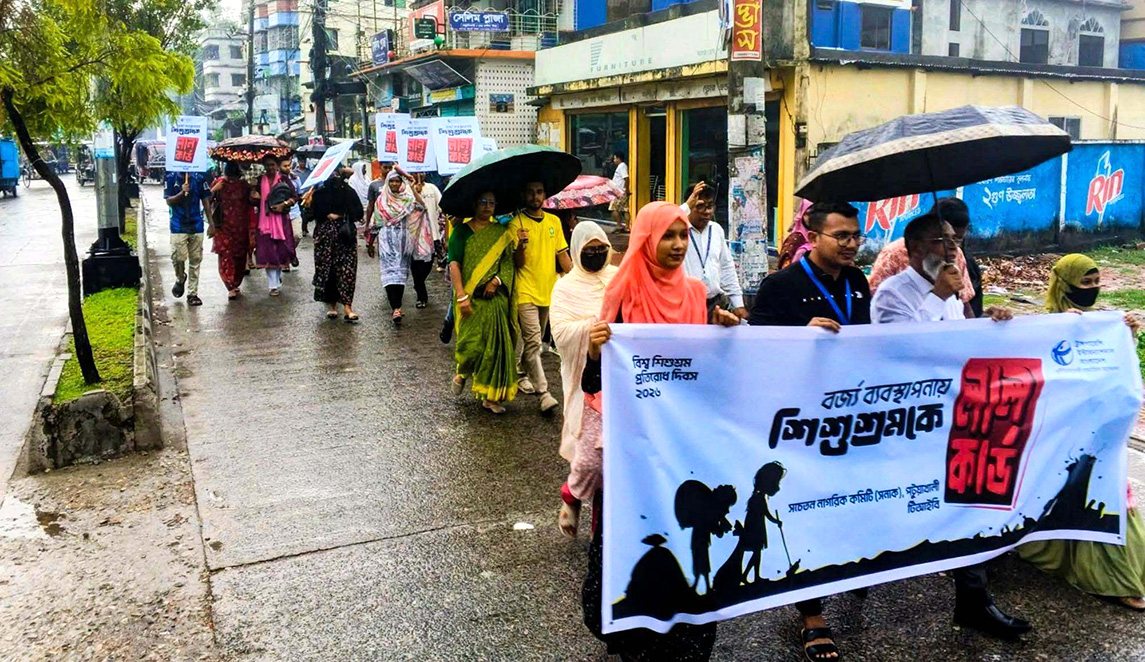
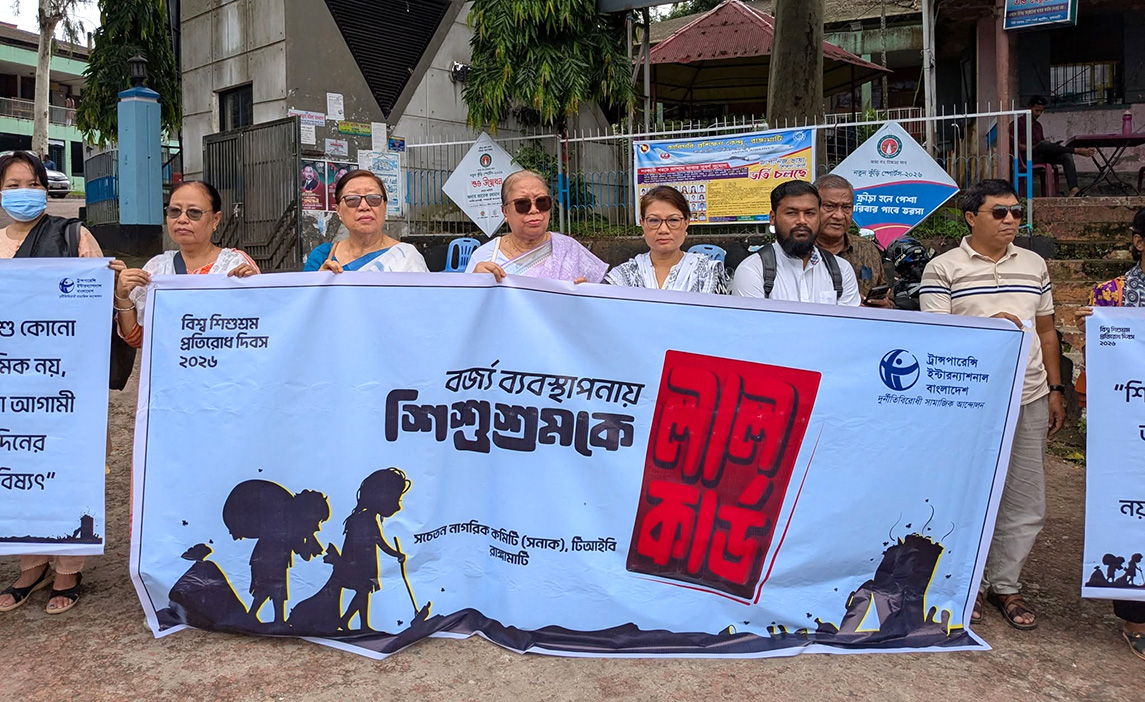
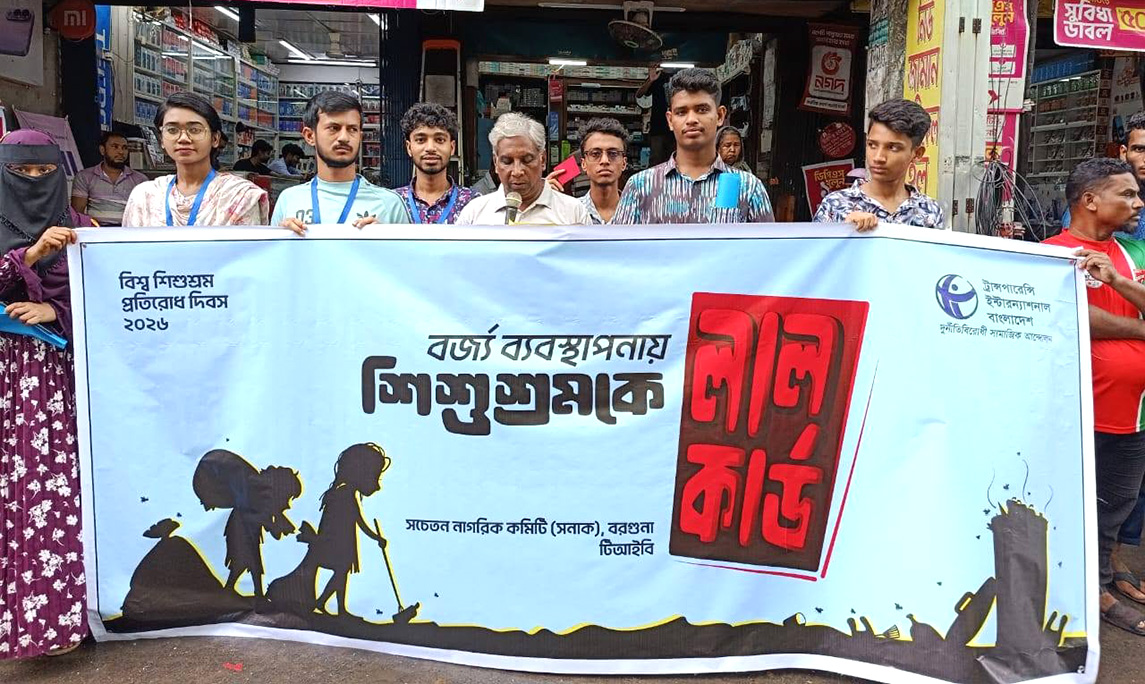
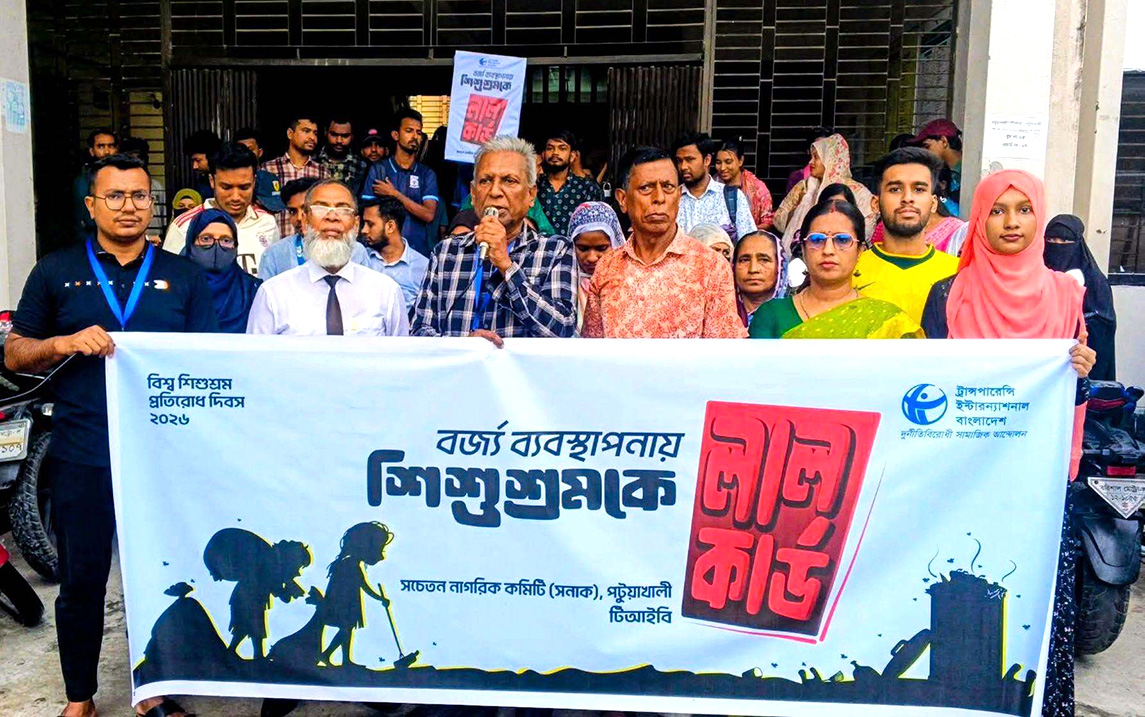
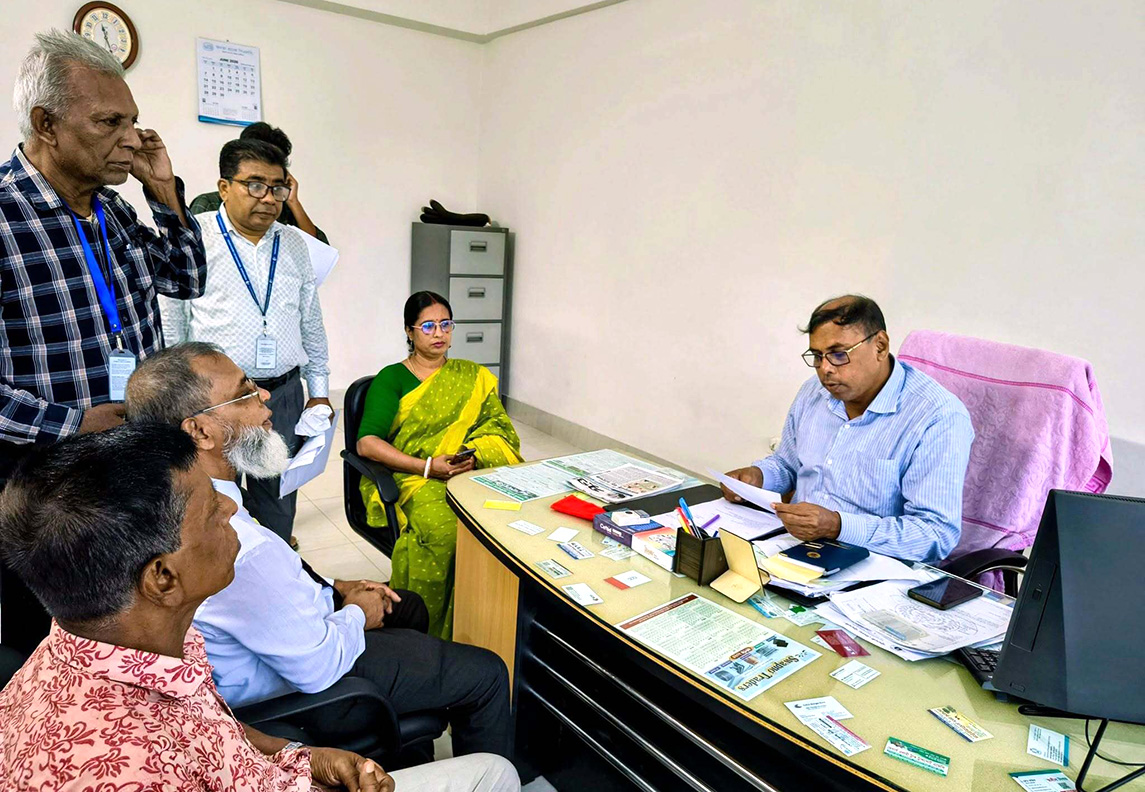
Recognizing that such change must also begin at the local level, Transparency International Bangladesh (TIB) joined the global observance of the International Labour Organization’s World Day Against Child Labour 2026 through its Committees of Concerned Citizens (CCCs) across the country. Under the call “Red Card to Child Labour in Waste Management,” CCCs organized rallies and submitted memoranda to municipal administrators.
These were not merely ceremonial activities. They were part of a wider effort to bring the realities of children working with waste to the attention of local decision-makers and call for practical action. The memoranda urged municipal authorities, waste management institutions, service providers, and civil society actors to strengthen monitoring, enforce existing protections, and ensure that no child is forced into hazardous work simply to survive.
For TIB, eliminating child labour cannot remain the responsibility of national policymakers alone. Local governments determine how waste services are managed and monitored. Service providers influence working conditions across the sector. Citizens, too, have a role in questioning practices that place children at risk. When each of these actors accepts responsibility, a fragmented and largely informal system can begin to become safer, more accountable, and more humane.
This transformation will not occur instantly. Yet every policy enforced, every demand for accountability, and every local initiative can help move the waste sector closer to meaningful change.
The true success of this effort will not be measured only by how many recommendations are implemented. It will be visible on the day when no child has to search through a pile of waste to earn a living—and every child can begin the morning with the promise of education, safety, and a future shaped by possibility.