Press Release
Dhaka, 1 November 2026: Political parties in Bangladesh have significant shortcomings across all indicators of good governance in their institutional operations, including transparency, accountability, democratic practices, participation and inclusion, and the prevention of irregularities and corruption. Dependence on individuals and the predominance of informal sectors and sources in political financing are contributing to the development of individualism- and family-centred politics within political parties. In this context, internal reforms are essential to ensure good governance in the institutional operations of political parties, one of the key institutions of democracy. The responsibility for undertaking these reforms rests with the political parties themselves. These findings were revealed in a research report titled Institutional Governance of Political Parties in Bangladesh.
The research report was unveiled at a press conference held today at the Dhaka office of Transparency International Bangladesh (TIB). Those present included TIB Executive Director Dr Iftekharuzzaman, Adviser – Executive Management Professor Dr Sumaiya Khair, and Director of Research and Policy Muhammad Badiuzzaman. The press conference was moderated by Director of Outreach and Communication Mohammad Tauhidul Islam. The report was presented by Research Associates Kawsher Ahamed and Kazi Aminul Hasan, and Senior Research Fellow Md Julkarnayeen of the Research and Policy Division. The qualitative study involved contacting 42 political parties (37 registered and five unregistered), of which 32 provided information. The research covered the period from the commencement of political party registration in 2008 to December 2025. However, updated data and information up to August 2026 were also used in certain cases.
According to the research findings, there is a lack of a robust legal framework to ensure good governance in political parties, particularly in relation to internal democratic practices and transparency and accountability in political financing. In many cases, existing laws and regulations are not aligned with international good practices. The existing system of legal requirements for political party registration creates conditions for competitive clientelism, compelling parties to rely on the patronage of businesspeople and wealthy individuals to finance their operations. Deficits in democratic practices, participation and inclusion in party activities have contributed to the emergence of individual-centric leadership, dynastic politics, authoritarianism, elitism, majoritarianism and patriarchal culture within political parties.
The research identified several limitations in the legal framework. Under the Representation of the People Order (RPO), 1972, every political party is required to have a constitution that does not conflict with the Constitution of the People’s Republic of Bangladesh. However, the constitutions of seven political parties contain provisions that conflict with various articles of the national Constitution. Section 90B prohibits political parties from having affiliated or associated organisations comprising teachers or students, employees or workers of financial, commercial or industrial institutions or organisations, or members of any other profession. Nevertheless, although not provided for in their party constitutions, almost all parties, particularly the major ones, operate student and professional organisations under the labels of “affiliated” or “fraternal” organisations. Furthermore, allegations of irregular financial transactions have emerged in connection with the registration of new political parties. In many cases, the establishment and registration of parties have reportedly been facilitated by financial resources, muscle power and political influence. Allegations have also been raised regarding government intervention or the influence of state intelligence agencies in the registration of several new political parties.
According to information obtained from political parties during the research, a party maintaining offices and conducting activities in at least 22 districts and 101 upazilas to meet the registration requirements would incur an estimated annual expenditure of BDT 14–25 crore, whereas its maximum potential income from declared sources (membership fees) would amount to only BDT 26 lakh. On the other hand, if a party's activities extended to all districts, metropolitan areas, upazilas, municipalities and union parishads, its annual expenditure would amount to an estimated BDT 302–393 crore, against potential membership-fee income of BDT 14–38 crore. If its organisational network extended down to the ward level, annual expenditure would rise to an estimated BDT 1,532–2,188 crore, while potential income from membership fees would amount to only BDT 116 crore.
Regarding financial management, the research found that none of the parties had a financial policy or procedural guidelines. Provisions in party constitutions concerning income and expenditure, membership fees according to rank, conditions for accepting donations, nomination form fees, bookkeeping, financial transactions, procurement, auditing and financial accountability were found to be unclear. Political parties do not prepare annual budgets. Nor do the parties or the Election Commission publish the audited annual income and expenditure statements submitted by the parties.
Regarding internal democratic practices, the research found that although most parties elect their party chiefs through national councils, elections are generally conducted through voice votes rather than secret ballots. There is no established practice of accepting nominations from multiple candidates for the position of party chief. Multiple candidates were found to contest for the position in only two parties - the Communist Party of Bangladesh (CPB) and the Amar Bangladesh Party (AB Party). With the exception of one party (CPB), the constitutions of the other parties do not specify how many times or for how many terms an individual may serve as party chief. Among the political parties covered by the research, leadership positions in 10 parties were found to be family-centred.
In 12 parties, the party chiefs had served in their positions for 10 years or more. The constitutions of three parties do not specify the tenure of their central committees, while the constitution of one party (Bangladesh Khelafat Majlish) does not specify the process for forming its committee. Although party constitutions provide for various formal structures for internal decision-making, including national councils, central executive committees and subcommittees, decision-making in most parties is largely individual-centric.
Regarding accountability, the research found that although the constitutions of all parties designate the national council or convention as the highest decision-making body, council meetings in 16 parties are held irregularly, and decisions taken at these meetings generally involve the approval of previously determined decisions. Most party constitutions do not specify eligibility and disqualification criteria for candidates seeking party nominations. Although six parties mention criteria such as “popularity”, “integrity” and “loyalty to the party”, these remain insufficiently defined. There are allegations that influential political parties give preference to candidates with financial resources and business backgrounds when nominating candidates for elections. Allegations of nomination trading have also been raised against three influential parties. The proportion of businesspeople among candidates and elected Members of Parliament has remained significant across the past five national parliamentary elections.
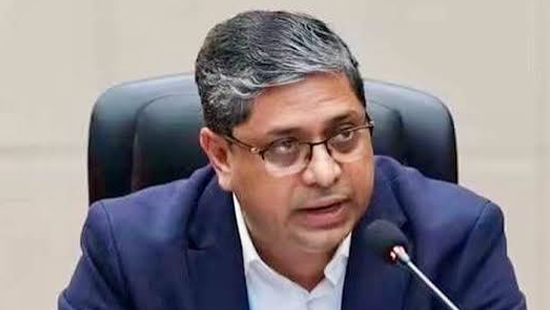
Speaking at the press conference, TIB Executive Director Dr Iftekharuzzaman said, “Political parties play one of the most important roles in establishing democracy in Bangladesh and elsewhere. The political parties deserve much of the credit for whatever progress has been made in our country's democratic journey. However, despite the opportunities, they must also bear responsibility for what remains unachieved. There are widespread deficiencies across every aspect of their institutional operations, including transparency, accountability, democratic practices, participation, inclusion, and effective mechanisms to prevent irregularities and corruption. A tendency to disregard the Constitution and relevant laws and regulations is evident among political parties. At the same time, from party registration to conducting organisational activities and participating in elections, political parties have become excessively dependent on financial resources, making them increasingly reliant on businesspeople and wealthy individuals. This dependence on individuals and informal sources of political financing is contributing to the abuse of power, the influence of black money, political corruption and internal conflicts within influential parties, turning political parties into power-centred business models.”
On women’s participation in political parties, Dr Iftekharuzzaman said, “Despite legal obligations and commitments to women’s inclusion in party activities, no tangible progress is evident. There is reluctance to include women leaders and activists, and their presence is often merely symbolic. Deficits in internal democratic practices and grassroots participation are further deepening the prevalence of one-person or individual-centric leadership, dynastic politics, authoritarianism, elitism and patriarchy within political parties.”
Referring to instances where ad hoc measures have been taken in response to corruption, irregularities and abuse of power by party leaders and activists, the TIB Executive Director said, “Due to the lack of internal accountability, the use of money and muscle power, political violence and internal conflicts have become normalised within major political parties. In this context, internal reforms are essential to ensure good governance in the institutional operations of political parties, one of the principal institutions of democracy. However, the responsibility for undertaking these reforms rests with the political parties themselves. As a prerequisite for Bangladesh’s democratic future and for regaining public trust, political parties must look in the mirror and give serious consideration to fundamental reforms within their parties.”
The research report makes 12 recommendations to ensure good governance in the institutional operations of political parties. Key recommendations include: making necessary amendments to the Representation of the People Order (RPO), 1972, and the Political Party Registration Rules, 2008, to ensure transparency and accountability in party activities; bringing political parties under the purview of the Right to Information Act, 2009; increasing the Election Commission’s scrutiny of political parties’ financial accounts and oversight of their organisational activities, and taking effective measures in cases of non-compliance with legal obligations; preparing a list of registered chartered accountancy firms by the Election Commission and ensuring that political parties’ financial transactions are audited by firms on that list; incorporating provisions in party constitutions for holding regular and scheduled councils to form committees and elect party leadership, with leadership at every level elected through secret ballots; specifying the maximum period for which an individual may hold the position of party chief and other senior leadership positions; and ensuring the inclusion of women and marginalised communities in party leadership and electoral nominations.
Link to the research documents
Media Contact:
Mohammad Tauhidul Islam
Director, Outreach and Communication
Phone: +8801713107868
Email: tauhidul@ti-bangladesh.org