
Published: 05 March 2025
Concept Note
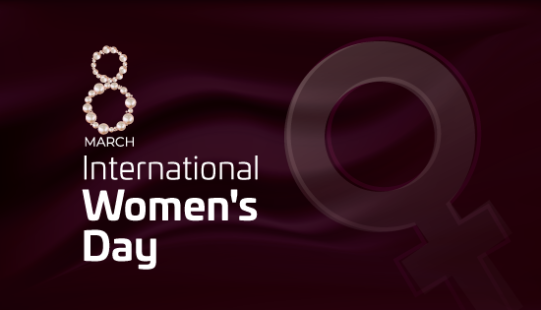
International Women's Day (8 March) is observed annually across the globe with special significance to establish women's rights and ensure gender equality. The initiative to celebrate Women's Day was first taken in 1909 as a tribute to the strike and struggle of female garment workers in New York City in 1908, who were demanding fair rights and better working conditions. Subsequently, in 1975, during the International Women's Year, the United Nations recognized 8 March as International Women's Day, and in 1977, the UN General Assembly passed a resolution for the day to be observed internationally. This year, the theme for Women's Day has been set as “Accelerate Action”. In the context of achieving gender equality, the Ministry of Women and Children Affairs of the Government of Bangladesh is celebrating the day with the theme "Rights, Equality, Empowerment: Development for Women and Girls.”
Bangladesh in Achieving Gender Equality
Article 28(2) of the Constitution of Bangladesh states that "women shall have equal rights with men in all spheres of the State and of public life." Bangladesh is also a signatory to the UN CEDAW Convention. In line with this, the National Women Development Policy 2011 was formulated, and the "National Action Plan to Prevent Violence Against Women and Children 2013-2025" was adopted. At the same time, the Eighth Five-Year Plan (2021-2025) and the Bangladesh Perspective Plan (2021-2041) have emphasized gender equality. Furthermore, in accordance with Sustainable Development Goal 5, Bangladesh is committed to the equal rights of women and the empowerment of women and girls. Despite these aforementioned commitments, Bangladesh is not only lagging in taking appropriate initiatives to ensure the rights and development of women but is, in fact, moving in the opposite direction.
Gender Gap and Bangladesh
According to the World Economic Forum's Global Gender Gap Report 2024, Bangladesh has experienced a significant decline compared to the previous year. Although Bangladesh leads among South Asian countries, it has dropped 40 places from the previous year, ranking 99th out of 146 countries. The report indicates that Bangladesh's most significant decline in this year's index is in the area of women's economic participation and opportunity. With a score of just 0.311, Bangladesh ranks last among the 146 countries. The disparity between men and women in educational attainment and access to health services has also widened. Moreover, the income disparity between men and women in Bangladesh has increased fivefold compared to six years ago. Women account for only about one-fifth of total employment in professional and technical jobs. In other words, the proportion of women in senior positions in the workplace has decreased.
For full concept note in Bangla click here.

.png)