Press Release
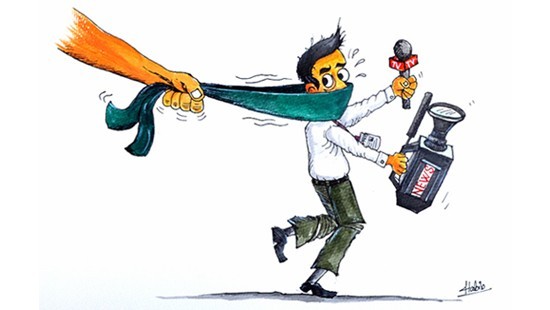
Dhaka, 09 December 2025: Transparency International Bangladesh (TIB), like every year, is observing International Anti-Corruption Day through various anti-corruption programs at both the national and local levels. This year’s observance includes a national-level discussion titled “Bangladesh’s Media Landscape After the Fall of Authoritarianism”, along with the announcement of the Anti-Corruption Investigative Journalism Awards 2025.
Members of the Committees of Concerned Citizen (CCC), Active Citizens Group (ACG), and Youth Engagement and Support (YES) group from 45 regions across the country, including Dhaka, also joined the human chain organized by the Anti-Corruption Commission (ACC). In addition, CCC, ACG, and YES groups organized rallies, discussions, cultural events, and other activities nationwide. TIB is also running a special Facebook campaign encouraging people to change their profile pictures using a frame with the message “Stand Strong Against Corruption: Together, Now.”
As part of the national program, a discussion titled “Bangladesh’s Media Landscape After the Fall of Authoritarianism” and the announcement of the Anti-Corruption Investigative Journalism Award 2025 were held at TIB’s Dhanmondi office at 11:00 a.m. today. The keynote paper was presented by Zafar Sadiq, Deputy Coordinator of TIB’s Outreach and Communication Department. His presentation analyzed the historical trajectory and legal framework of the media in Bangladesh, the challenges facing media institutions and journalism, modes of registration and ownership, and offered an in-depth discussion of the current media environment following the fall of the authoritarian regime.
The discussants included Dhaka Tribune Editor Reaz Ahmad; senior journalist and former Chief News Editor of News24 Shahnaz Munni; former Executive Director at Channel 24 Talat Mamun; Editor of Daily Gramer Kagoj (Jessore) Mobinul Islam Mobin; Professor Dr. Shameem Reza of the Department of Mass Communication and Journalism at Dhaka University; Mohammad Touhidul Islam, Head of News at Jamuna Television; AFP’s Bangladesh Bureau Chief Sheikha Sabiha Alam, and journalists from various media outlets. The event was moderated by Mohammad Tauhidul Islam, Director of TIB’s Outreach and Communication Division, and moderated by TIB Executive Director Dr. Iftekharuzzaman.
Speaking at the discussion, Dhaka Tribune Editor Reaz Ahmad said, “Such recognition in journalism is essential. We must create an environment that ensures quality journalism and inspires journalists. Yet, over the past years, the media environment has been polluted—and this culture continues. The media has been manipulated to such an extent that no one can even claim that media is not free, because a system has been created where anyone can get a license. But on what grounds are these licenses being issued? As a result, public trust in the media is declining.”
AFP Bangladesh Bureau Chief Sheikh Sabiha Alam said, “Information alone can dispel misinformation. Similarly, journalism will defeat pseudo-journalism. Despite many challenges in recent years, we have seen strong and impactful reporting. Therefore, journalism must continue. The more it continues, the more public confidence will grow.”
Former Executive Director at Channel 24, Talat Mamun, said, “Journalism is facing many challenges, and lack of trust is one of the biggest. But instead of losing hope, we must ensure quality in news media. There is a lack of unity among journalists, which is a professional weakness. After authoritarianism collapses, new forces emerge. Journalists must prepare themselves to deal with those.”
Shahnaz Munni said, “Discussions on establishing a Media Commission and implementing its recommendations are positive. Ahead of the upcoming election, we hope political parties will commit to implementing the Commission’s recommendations. In the past, even with fewer channels, a strong story could shake society, if not the government. Now, the number of media outlets has increased—but so has the noise. Women’s representation in media remains low, and many women are reluctant because the working environment has not improved.”
Dr. Iftekharuzzaman said, “The media does not stand outside the country’s overall political and bureaucratic structure. As a producer of essential public goods—news, information, and reports—its rightful place should be as the government’s most important ally in serving the public interest. Yet every government in Bangladesh has consistently treated the media as one of its adversaries. As a result, instead of undertaking much-needed reforms for a free press, what has happened under the interim government in the name of reform—especially through ordinances related to cyber security, personal data protection, and national data governance—has only strengthened the state’s surveillance and control. This has deepened concerns over press freedom, freedom of expression, and overall freedom of speech. Therefore, the lack of progress in implementing the Media Reform Commission’s recommendations is hardly surprising.”
He further said, “In Bangladesh, the growth of authoritarianism had an important accomplice: the media. In many cases, the media surrendered. Some even became ‘enemies within’ in exchange for benefits and privileges. As a result, the credibility of the entire sector has come under threat, especially because those in the media who have fallen into professional bankruptcy have affected public trust. This is why self-reflection is crucial—the mirror must be faced. On the other hand, since 5 August 2024, the country has witnessed rampant partisanship, land-grabbing, politically motivated tagging, the ‘business’ of filing cases, and arrests for profit—activities in which political and bureaucratic powers were involved, and certain sections of the media also played a role. These practices continue both nationally and locally. Authoritarianism in Bangladesh evolved over a long process, shaped by a zero-sum political culture. Over the past 15 years, this process matured into a full-blown kleptocracy. After the political shift, some within the media who now consider themselves victorious have fallen into a mindset of ‘now it’s our turn,’ desperately trying to continue the same practices. In doing so, they have pushed the emerging possibilities for reform towards failure.”
Dr. Iftekharuzzaman added, “Much of what is necessary for media reform has still not been implemented. Every reform commission proposed many actionable and urgent recommendations. The government itself had requested a list of proposals that could be implemented immediately. Yet none of these were carried out. Where, then, were the obstacles? Everyone speaks in favor of reform, but those who should drive reform from within are often the ones playing a preventive, gatekeeping role—most notably the bureaucracy. For true reform, both the political culture and the bureaucratic structure must change. Without that, the people will once again have to unite.”
After the discussion session, TIB announced the winners of the Anti-Corruption Investigative Journalism Awards 2025. This year, four journalists and one documentary program were honored across different categories. In the Regional Newspaper category, the winners are Faisal Islam, Senior Staff Reporter of Daily Gramer Kagoj (Jessore), and Staff Reporter Ashiqur Rahman Shimul. In the National Newspaper category, the award went to Rashidul Hasan, Senior Staff Reporter of the English daily The Daily Sun. In the Television (Report) category, the winner is Mufti Parvez Nadir Reza, former Special Correspondent of Ekattor Television (currently Head of Input and Planning Editor at Channel One). Each winner received a certificate of recognition, a crest, and a prize of BDT 125,000. In the Television (Documentary Program) category, the winning entry is Searchlight, a documentary program aired on Channel 24. The investigation and presentation were led by Md. Faizul Alam Siddique, former Special Correspondent of the Searchlight team (currently Special Correspondent at Star News). The winning documentary received a certificate of recognition, a crest, and a prize of BDT 150,000.
Media Contact:
Mohammad Tauhidul Islam
Director, Outreach and Communication
Phone: +8801713107868
Email: tauhidul@ti-bangladesh.org