Press Release
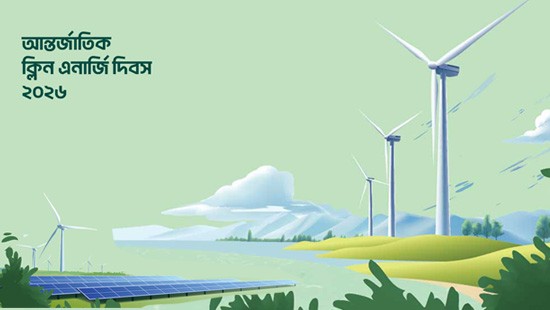
Dhaka, 26 January 2026: Transparency International Bangladesh (TIB) and like-minded organisations have expressed deep dissatisfaction that the interim government has failed to establish a foundation for transitioning the existing energy system of the country toward renewable or clean energy. At the same time, they called upon political parties participating in the upcoming national election to completely restructure the draft "Energy and Power Sector Master Plan (EPSMP) 2025" by ensuring the participation of civil society, neutral experts, and relevant stakeholders in the decision-making while prioritising renewable energy. This call was made during a human chain organised in front of the National Parliament at Manik Mia Avenue on Monday to observe International Day of Clean Energy 2026.
A concept paper highlighting the importance of renewable energy and ensuring good governance in the energy sector was presented at the event by Ashna Islam, Assistant Coordinator of the Energy Governance division of TIB. The human chain saw participation from various organisations, including Waterkeepers Bangladesh, Karmojibi Nari, DHORA, ActionAid Bangladesh, ETI Bangladesh, Coastal Livelihood and Environmental Action (CLEAN), Participatory Research and Action Network (PRAN), Manusher Jonno Foundation (MJF), CPD, BILS, CAB, BSREA, BGEF, BAPA, The Earth Society, BEI, BARCIK, CAPS, and MRDI. The event was moderated by Newazul Moula, Coordinator, Energy Governance, TIB.
Speaking at the human chain, TIB Executive Director Dr. Iftekharuzzaman noted, ‘The interim government has failed to take any initiative to create the foundation for transitioning the country's energy system to renewable, or clean energy, which could have been carried forward by a subsequent elected government; the government must answer why this did not happen. The government should inform the public through a white paper about what has been achieved nationally in line with the interim government chief's globally recognised and acclaimed “Three Zero” initiative consisting of zero poverty, zero unemployment, and zero carbon emissions. The core concept and strategic foundation of the energy master plan are still dependent on fossil fuels, and it is essential to include guidelines for transitioning to clean energy within it. Such neglect is not expected from the interim government because it is a matter of our national existence. In this regard, the question is whether those in charge of running the state have thought at all about critical issues like the risk to the existence and national security of the people of this country due to carbon pollution driven climate change. The draft EPSMP 2025 prepared by the interim government without engaging stakeholders carries the risk of further institutionalising deficits in good governance, including fossil fuel biased policy capture, conflicts of interest, abuse of power, and corruption in the energy sector. I call upon those who will come to power as the elected government to overhaul the draft energy master plan through a participatory process prioritising clean energy and to formulate an action plan that will truly pave the way for achieving the zero carbon emission goal.’
TIB first observed International Day of Clean Energy in Bangladesh last year to increase awareness about the renewable energy transition. This year, the organisation has undertaken various programs at the local and national levels. At the local level, members of the Committee of Concerned Citizens (CCC), Active Citizens Group (ACG), and Youth Engagement and Support (YES) groups in 45 districts and sub-districts are conducting awareness campaigns, public rallies, human chains, and discussions regarding renewable energy production and usage.
To ensure good governance and effective steps in the renewable energy transition, TIB provided several recommendations. These include formulating a realistic roadmap for electricity generation from renewable sources by setting uniform targets in all existing policies, including the Renewable Energy Policy 2025. TIB also proposed creating a suitable investment framework for production, supply, and technological innovation to ensure policy priority for the sector. Furthermore, the organisation called for following transparent and proper processes in issuing environmental clearances and monitoring pollution for energy projects. TIB recommended the disclosure of all project proposals and contract documents signed with international, regional, and domestic institutions. Other recommendations included simplifying net-metered solar installations for industrial and residential consumers, implementing feed-in-tariffs, providing incentives, and ensuring that all project approvals and contracts remain free from conflicts of interest etc.
Media Contact:
Mohammad Tauhidul Islam
Director, Outreach and Communication
Phone: +8801713107868
Email: tauhidul@ti-bangladesh.org